
News October 28, 2026
Diesel Tightness Puts Oil and Bunker Prices Under Pressure
Prices are telling us the market is tight
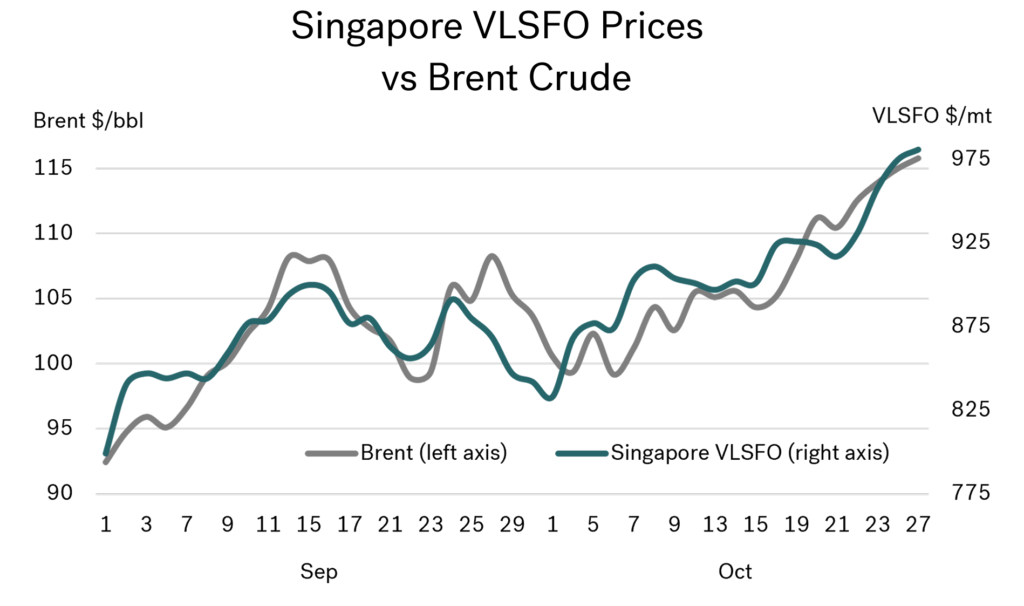
Crude oil production is increasing as more Middle Eastern volumes make their way back into the market. At the same time, oil demand is much lower than we expected. This begs the question: why are oil prices rising so rapidly, approaching the wartime highs seen in March and April?
It was only four months ago that a US-Iran peace agreement looked imminent, and we and the markets thought the war was about to end. Clearly, that did not happen! Oil prices reflect what is happening in the world, and Brent front-month futures have risen from $70/bbl back then to $90/bbl at the start of September and $115/bbl now. This is an increase that none of us can escape.
Singapore VLSFO prices have followed the same trend, rising from $675/mt in early July to $800/mt in early September and $975/mt currently. That is an increase of $300/mt, or more than 40%.
Source: Integr8 Fuels
Oil supply is recovering, but remains below pre-war levels
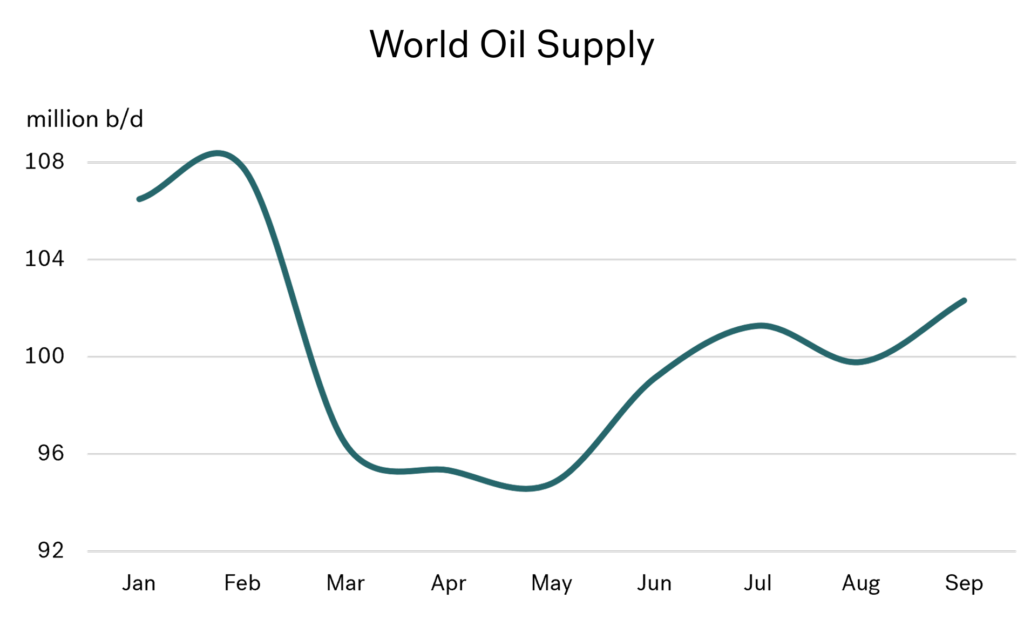
The US-Iran war led to a 13 million b/d loss in oil supply, which persisted through to May. However, production has been rising since then. Over the past couple of months, increased ship-to-ship operations in the Gulf of Oman have enabled more volumes to be exported from the region. In addition, crude flows through the Saudi East-West pipeline to the Red Sea have rebounded by 1 million b/d, following earlier Houthi attacks on the infrastructure.
As Middle East producers work to diversify their export operations, the supply shortfall has narrowed from 13 million b/d to around 5 million b/d more recently. This represents an 8 million b/d recovery from the lows seen between March and May.
Source: Integr8 Fuels
A quick review of the situation in each country shows:
- Saudi Arabia: Crude output losses of around 4 million b/d have narrowed to 2 million b/d.
- Kuwait: Output losses have fallen from 2 million b/d to 1 million b/d.
- Iraq: Output has recovered to near pre-war levels, after an initial loss of 3 million b/d.
- Iran: Output losses have continued.
- UAE: Production and exports have increased since leaving OPEC in May this year.
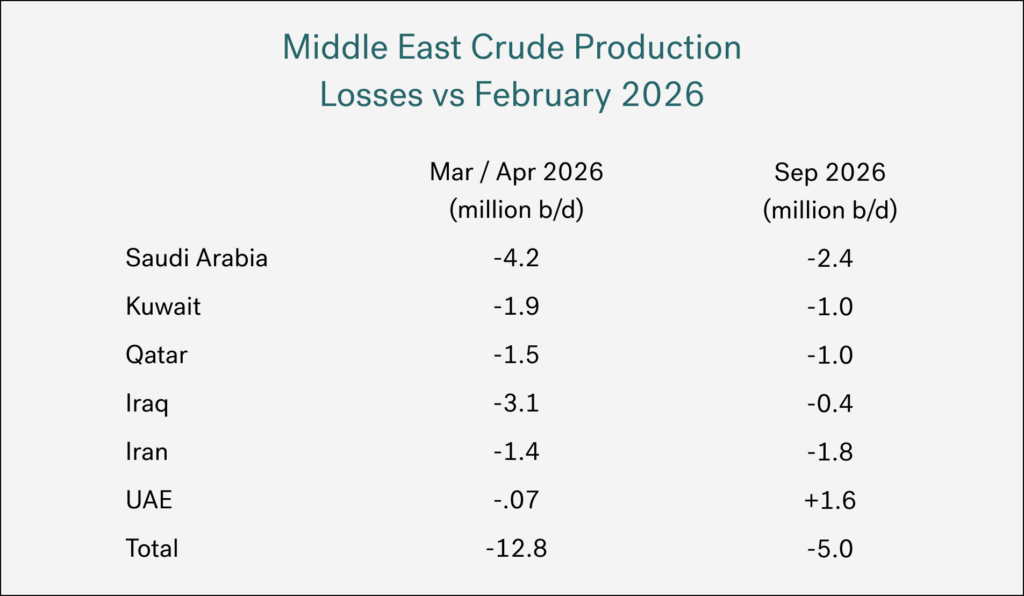
Oil supply remains around 5 million b/d below pre-war levels. There may be opportunities to increase supply further, but while the war continues, the risk of attacks and further disruptions remains. As a result, the market remains cautious about supply.
Like supply, oil demand is recovering, but remains below
pre-war levels
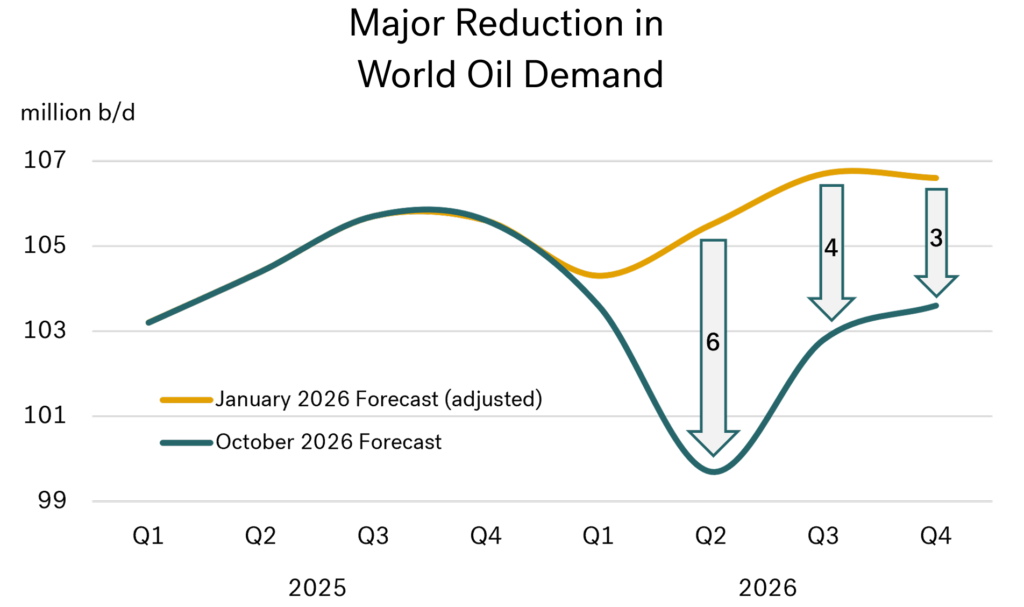
The war and high prices have also led to a significant reduction in oil demand. In the initial stages, demand fell by around 6 million b/d. We are now seeing a recovery, but demand remains some 3-4 million b/d below pre-war expectations, with most of the shortfall in transport fuels such as gasoline and diesel, as well as naphtha.
Source: Integr8 Fuels
Everything is down, but the fundamentals are still tightening
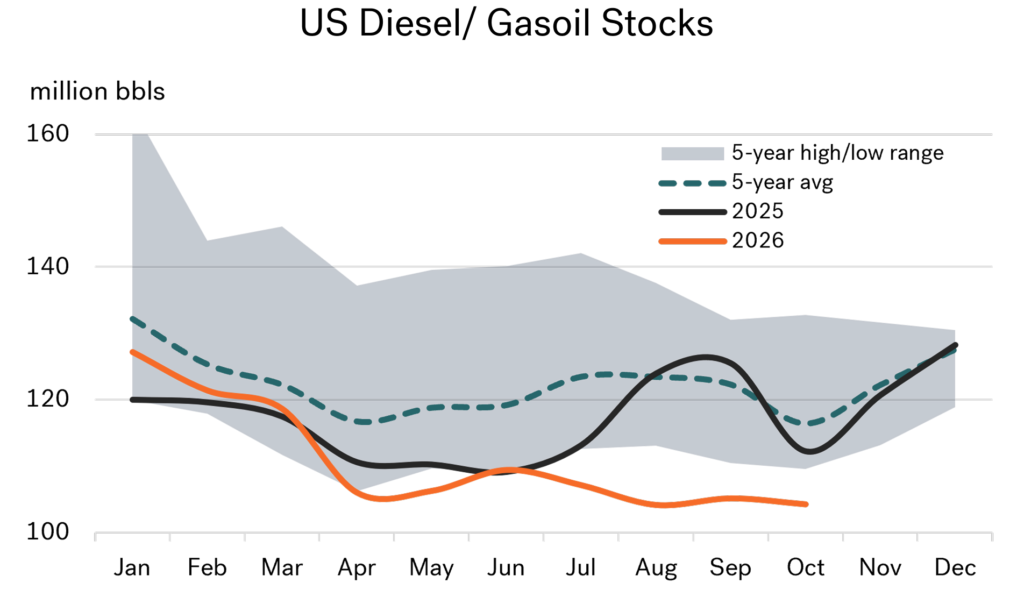
Throughout the war, supply losses have consistently exceeded demand losses, meaning the market fundamentals have tightened as the conflict has progressed. We have now reached a crunch point, with diesel and gasoil stocks at multi-year lows just as the Northern Hemisphere winter approaches.
With the war ongoing, political developments unpredictable, oil market fundamentals tightening and stocks of seasonal fuels exceptionally low, Brent futures have risen and are trading close to their March/April peaks.
Focus is on the diesel/gasoil part of the barrel
Diesel and gasoil markets have faced restricted supply for several years due to sanctions on Russia. Russia was a major exporter of these products, and Europe was heavily dependent on these supplies. Without Russian volumes, Europe was forced to compete more aggressively for diesel and gasoil from other markets, including the Middle East, India and the US.
Now, with exports from the Middle East severely constrained, tightness in the diesel/gasoil market has intensified, pushing prices to another level. A further effect is that countries that have traditionally exported products, such as China, have often restricted export volumes, tightening global supply even further.
Diesel and gasoil stocks typically build in the third quarter ahead of peak demand during the Northern Hemisphere winter. This year, however, stocks have fallen sharply, leaving the market in a difficult position heading into the winter months.
These developments matter not only to the oil industry, but also to the industrial, commercial and domestic sectors that rely on these fuels. With prices surging to all-time highs, the impact on economic growth and global interest rates is becoming increasingly significant. The diesel/gasoil market has now become a mainstream news story and has also prompted a major political response from the US.
Europe
Europe is short of diesel/gasoil going into the winter period. The loss of Russian and Middle Eastern supply, combined with record-high freight costs, is restricting international trade flows. There have been announcements of strategic stock releases. While these may have a limited impact on prices in the short term, they cannot offset the much tighter market fundamentals or the ongoing war in the Middle East.
The US
The situation in the US has been even more dramatic, both in market and political terms. Diesel/gasoil stocks have fallen to exceptionally low levels, pushing prices sharply higher. As the graph below shows, US diesel/gasoil stocks have remained below five-year lows since April. You have to go back to 1996 to find stocks at similarly low levels heading into the winter period.
Source: US EIA
President Trump and President Putin find common ground
It is perhaps no surprise that this prompted President Trump to suggest a ban on US diesel exports. However, such a move would only constrain US refinery operations and was unlikely to be workable. The next proposal was put into effect, with sanctions on Russian diesel exports relaxed in an effort to bring down prices “fast”, ahead of the US midterm elections.
The political implications go well beyond the scope of this bunker report. From a pricing perspective, however, a relatively small injection of 2.2 million barrels of Russian diesel could not reverse the underlying market fundamentals or halt the surge in diesel prices.
Prices look set to stay high, but bunker quality also warrants closer attention
Much of this analysis has focused on oil supply, demand and pricing, and the implications for bunker prices. The outlook suggests prices are likely to remain high. However, there are other factors to consider, particularly product specifications and quality. We have previously discussed how changing crude streams affect refinery output, but there is another layer to consider here: constraints in diesel/gasoil markets and trade flows, alongside the return of Russian volumes. Quality is another aspect of the bunker market we need to monitor, alongside price.
Is there anything that could turn the market?
Looking at the market now, tightness in diesel/gasoil is expected to persist through the Northern Hemisphere winter and well into 2027, with the severity depending on how cold the winter proves to be. This, in turn, is likely to keep oil and bunker prices high.
The clearest route to lower prices appears to be an end to the war and the resumption of unrestricted oil flows through the Strait of Hormuz. That has not happened in the run-up to the US midterm elections. So, is there anything else that could trigger a peace agreement?
Want to talk through what this means for your procurement strategy? Get in touch with our trading desk today.
By Steve Christy, Expert Contributor

Posted by
Research Team
Latest articles





Contact our Experts
With 65+ traders in 13 offices around the world, our team is available 24/7 to support you in your energy procurement needs.