
News Today, 19 hours ago
Europe & Africa Market Update 10 June
Durban
Gibraltar
Rotterdam
HSFO
LSMGO
VLSFO
Bunker prices across European and African ports have mostly fallen, while Gibraltar is facing vessel congestion ahead of rough weather.
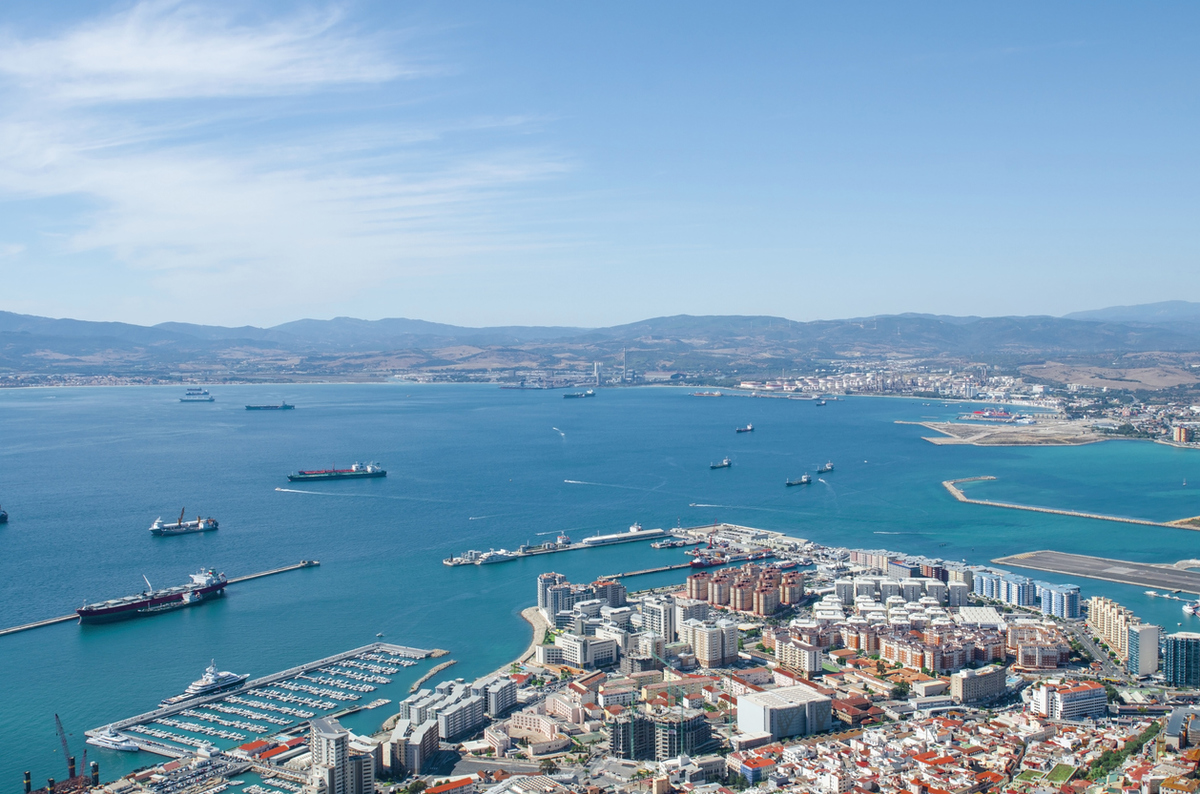 IMAGE: Aerial view of the Bay of Gibraltar. Getty Images
Changes on the day to 09.00 GMT today:
- VLSFO prices down in Durban ($62/mt), Rotterdam ($25/mt) and Gibraltar ($13/mt)
- LSMGO prices down in Gibraltar ($42/mt), Durban ($38/mt) and Rotterdam ($11/mt)
- HSFO prices down in Gibraltar ($13/mt) and Rotterdam ($12/mt)
- B30-VLSFO prices down in Rotterdam ($15/mt) and Gibraltar ($9/mt)
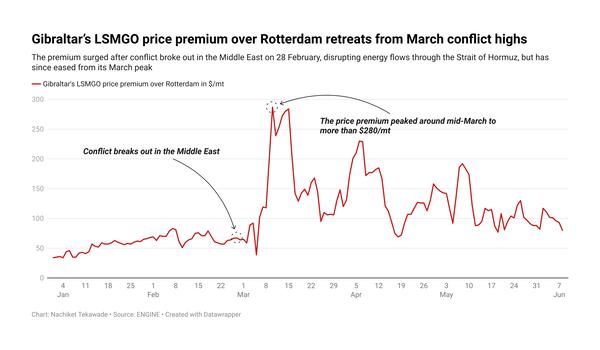
Gibraltar’s LSMGO price has decreased more sharply than in Rotterdam. A lower-priced 50-150 mt stem, fixed in Gibraltar at $1,120/mt, has put additional downward pressure on port’s benchmark.
This has narrowed Gibraltar’s price premium over Rotterdam by around $31/mt in a single day.
Bunker availability remains tight for prompt supplies in the Gibraltar strait, with buyers advised to book stems around 7-10 days ahead for all fuel grades, a trader said.
Ships calling in Gibraltar for bunkers are facing high congestion, with around 20 vessels waiting in the port for bunkers as of Wednesday morning due to lack of space, port agent MH Bland said.
Suppliers in the port are delayed by around 12-24 hours on deliveries subject to availability of space, the port agent added.
The Gibraltar Port Authority has issued a fog warning for Wednesday. The port authority has said that patches of sea fog overnight may reduce visibility to around 500 metres at times.
Strong winds of more than 25 knots are forecast in the port between 11-13 June, which may further impact bunkering operations and schedules.
Brent
The front-month ICE Brent contract has declined by $1.51/bbl on the day, to trade at $91.06/bbl at 09.00 GMT.
Upward pressure:
Brent crude’s price has felt some upward pressure after the American Petroleum Institute (API) reported a substantial decline in US crude stocks.
US crude oil inventories plunged by 9.1 million bbls in the week ending 5 June, according to the API.
Market participants had expected a much smaller draw of 3.4 million bbls.
A decline in US crude stocks indicate tightness in US oil market and may put some upward pressure on Brent's price.
“The latest data from the American Petroleum Institute (API) continues to show a tightening in the US oil market,” two analysts from ING Bank noted.
Downward pressure:
Brent’s price has declined, following news that Israel and Iran have agreed to stop the fire exchange for the time being.
Israeli Prime Minister Benjamin Netanyahu said the Israel Defense Forces (IDF) will refrain from attacking Iranian sites “for now.”
The news has renewed hopes of a broader ceasefire deal between the US and Iran – a move that could eventually reopen the Strait of Hormuz to commercial vessel traffic.
“This weakness [in Brent’s price] came amid renewed hopes of an imminent deal between the US and Iran, following both Israel and Iran calling an end to the strikes over the weekend,” ING Bank’s analysts said.
The latest data coming out of China has put additional downward pressure on Brent’s price today.
China’s total oil imports declined by 3.2 million b/d year-on-year in May to about 7.8 million b/d, Bloomberg reported, citing Chinese customs data. It marked the “lowest level since October 2017,” according to ING Bank’s analysts.
By Nachiket Tekawade and Aparupa Mazumder
Please get in touch with comments or additional info to news@engine.online
Provided by

Latest articles from the region

Contact our Experts
With 65+ traders in 13 offices around the world, our team is available 24/7 to support you in your energy procurement needs.